
Courtesy of the Times Colonist
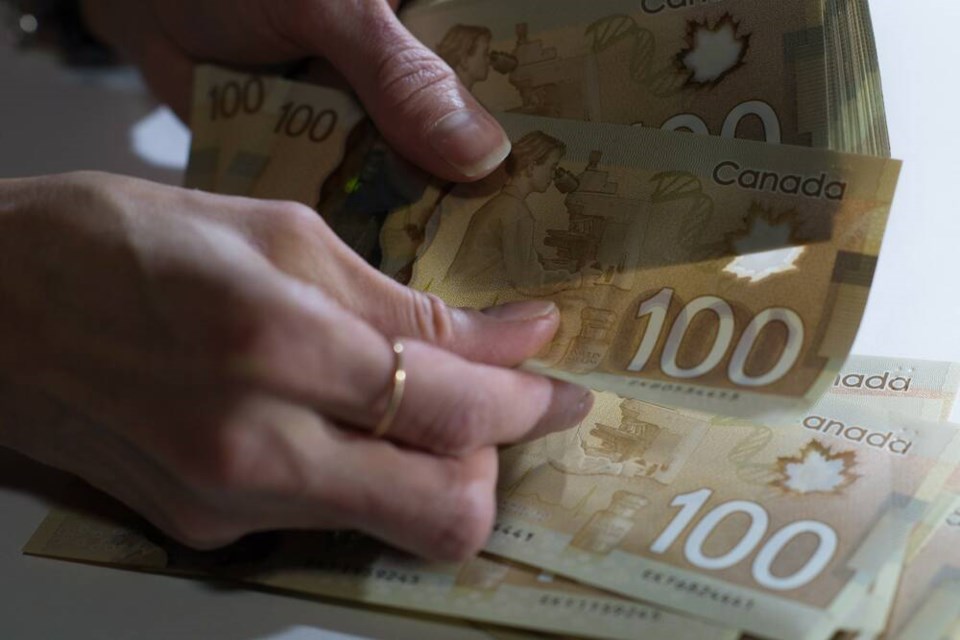
Photo: “Inequality has long been a defining feature of the global economy, but by 2025, it has reached levels that demand urgent attention,” said the authors of the 2026 World Inequality Report. GRAEME ROY, THE CANADIAN PRESS
Last week, I discussed a couple of recent global-level reports that identify serious problems with our current economic system. In particular, the UN Environment Programme, in its 2026 report Global Environmental Outlook 7, found that human-created climate change, biodiversity loss, land degradation and desertification, and pollution and waste are undermining human wellbeing and “already costing trillions of dollars each year.”
The report recommended investing in transforming our societies and economies because doing so will avoid or reduce these costs and have huge economic benefits. Another report, this one in early February from the Intergovernmental Platform on Biodiversity and Ecosystem Services — the biodiversity equivalent of the Intergovernmental Panel on Climate Change — focuses on the relationship between business and biodiversity.
Prepared by a panel of public and private sector experts from 35 countries, the report found that in 2023, public and private expenditures of US$7.3 trillion, two-thirds of them from the private sector, had direct negative impacts on nature. These expenditures included “environmentally harmful public subsidies and private investment in high-impact sectors.”
Troublingly, that means governments are spending around US$2.4 trillion each year on environmentally harmful subsidies.
Meanwhile, less than one-tenth of that amount from public and private sectors combined was “directed toward activities that contribute to the conservation and sustainable use of biodiversity.”
Looks to me like the definition of insanity.
But it’s not just about the way our current economic and societal systems harm the planet. Suddenly, it seems to be dawning on people — at least, some people — that our economy is socially unfit too.
Writing in Time Magazine on Jan. 27, Professor Olivier de Schutter, UN Special Rapporteur on Extreme Poverty, stated our economic system “is fundamentally unfit for purpose.”
It “only ever serve[s] a tiny minority,” he wrote, adding “it will always do so at the expense of the planet and the vast majority of people who live on it.”
The authors of the 2026 World Inequality Report write: “Inequality has long been a defining feature of the global economy, but by 2025, it has reached levels that demand urgent attention.”
Indeed, frankly, the level of inequality has reached obscene levels. This is highlighted by a finding in the report that “fewer than 60,000 multi-millionaires control today three times more wealth than half of humanity combined” — that is, more than the poorest 4 billion people!
More broadly, the report notes, those 4 billion people — half the world’s population — have only eight per cent of the world’s income and only two per cent of its wealth. The authors of the WIR make the point that “Reducing inequality is not only about fairness but also essential for the resilience of economies, the stability of democracies, and the viability of our planet.”
So in what conceivable way is this level of inequality fair, just and appropriate? Why aren’t those 60,000 people rushing to share their wealth — and if they won’t, why aren’t we taxing it and redistributing it? How many millions or billions does anyone actually need anyway?
As in previous reports, the authors make the vital point that “These divides are not inevitable. They are the outcome of political and institutional choices.”
In a forthcoming report to the UN Human Rights Council, Professor de Schutter will present an action agenda to reduce extreme poverty that outlines some of the choices we need to take. His proposals fall under five pillars, with adaptive governance and participatory decision-making underpinning them all.
The first pillar is focused on “how economic systems can be reimagined to prioritize sustainability and wellbeing over consumerism and GDP growth.”
It includes ideas about progressive taxation, subsidy realignment, tax enforcement and embedding social purpose in corporate activity. And there is much, much more.
The fact that we are making bad political and institutional choices is not only true for inequality and poverty, but for public and private sector policies that lead us to spend vast sums of money on causing environmental harm and piddling amounts on protection and restoration. It’s time we changed our political choices if we want to ensure the wellbeing of people and the planet for this and future generations.
thancock@uvic.ca
Dr. Trevor Hancock is a retired professor and senior scholar at the University of Victoria’s School of Public Health and Social Policy.