
Article, Arts, Community, & Inclusivity
My recent columns about the ecological crisis we face and the need to reduce our ecological footprint generated emails from several people saying I should address the issue of population growth. They have a good point, but the issue is complex, and the solution is not just a matter of family planning.
Read more

Article, Arts, Community, & Inclusivity
Finding hope can be challenging these days, what with the global ecological crisis, high levels of poverty and inequality, nasty xenophobic and nationalistic politics, and the general failure of governments and societies to respond effectively to these and other challenges of the 21st century.
Read more
Article, Nature & Conservation
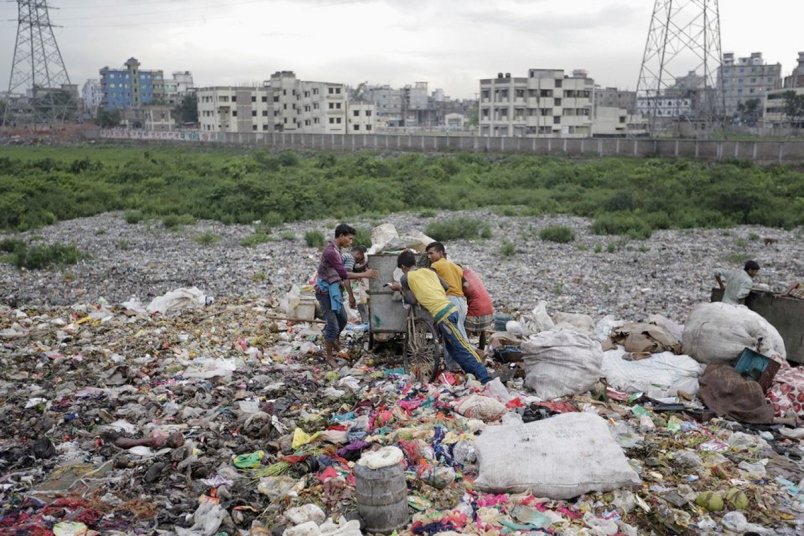
The ecological footprint measures our impact in terms of the amount of biologically productive land and sea we need to provide the crops and fish we use for food, the grass and feed crops we use for livestock, the timber we use for paper and wood, and the land we need planted in trees to absorb our carbon emissions (“energy land”).
Read more
Article, Food & Health
There is an interesting common thread underlying many of my recent columns. It is the question in the headline: Does mental health matter most?
Read more

Article, Nature & Conservation
The term solastalgia was coined 15 years ago by Glenn Albrecht, an Australian philosopher. He derived it in part from the idea of nostalgia, which means home-sickness. In the 19th and into the 20th century, he wrote, it was considered a medical condition caused by a desire to return to one’s home.
Read more
Nature & Conservation
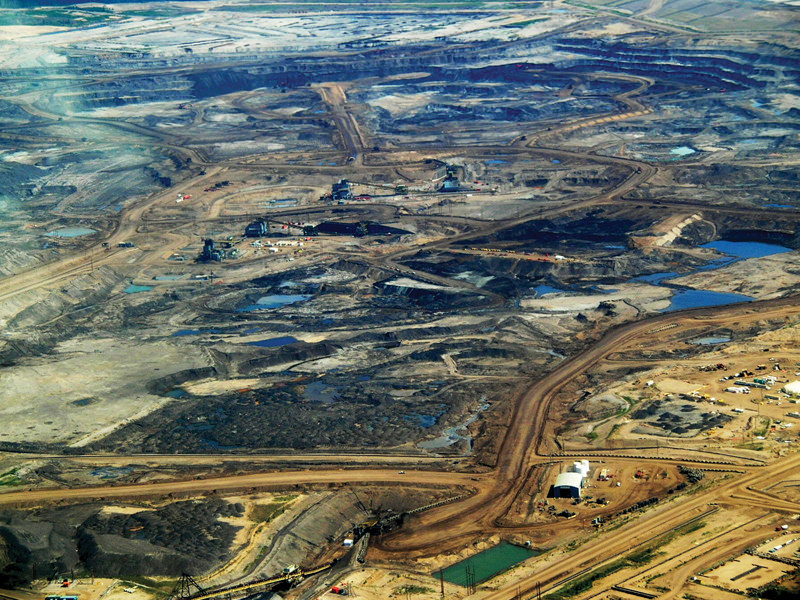
Not all resources must be mined, used and exported; the sorry story of asbestos proves that point, although it took a long time to overcome stubborn government support for this industry. The last asbestos mine in Canada closed in 2011, and Canada finally agreed to ban the use of asbestos as of this year — 30 years after the World Health Organization declared asbestos a carcinogen in 1987.
Read more

Food & Health
The World Economic Forum released its 2018 Global Risks report last week. One business reporter dubbed it “the Pandora report,” and that is a fair assessment. If you have an interest in the welfare of future generations — or, for that matter, young people alive today — it makes for sober reading.
Read more

Food & Health
I often find reason for hope — if not optimism — at the local level. Experience has shown that good things often start locally and move up, which explains why we should think globally, but act locally.
Read more

Food & Health
Courtesy of the Times Colonist Despite its name, the Ministry of Health is anything but focused on health. Like the “health-care system” it directs, it is largely focused on managing people with all manner of diseases, injuries or disabilities. Only a small part of... Read more

Food & Health
Courtesy of the Times Colonst Last week, The Lancet — one of the world’s leading medical journals — published another in its series of commission reports on various aspects of planetary health, this time on pollution and health. Next week, I will delve into the report... Read more

Arts, Community, & Inclusivity
There is an emerging community-based movement in the capital region — and elsewhere around the world — that recognizes that ecological, social and economic conditions and human well-being are not separate issues but are inextricably linked. In Victoria, some related initiatives have sprung up, mostly in just the past couple of years, that are working to address these intersecting issues holistically, but in different ways.
Read more
Food & Health
Not only is poor mental health costly to manage, it also represents a large burden of human suffering and loss of human potential and — to the extent it is preventable — a tragic societal failure. So it is good to see that, finally, we are beginning to pay attention to improving the mental well-being of the population.
Read more
Food & Health
But let’s face it, the purpose of marketing is to persuade us to buy more of their products — why else would a business spend all that money? And therein lies perhaps the greatest danger. Because marketing feeds into and supports the dominant narrative of growth, it stimulates us to want and need more products, more “stuff.”
Read more
Food & Health
This is not going to make me popular with my beer-drinking, Morris-dancing friends, or with a lot of other people, I imagine, but we need to put higher taxes on alcohol and implement other proven policies that make it less accessible and less glamorous. This is the conclusion one must come to on reading the report on alcohol harm in Canada just released by the Canadian Institute for Health Information and a 2015 report by Canada’s chief public health officer.
Read more
Food & Health
Canada is a wealthy country, and within Canada, B.C. is a wealthy province. And yet we have levels of child poverty that are shameful, that exert a terrible toll on the health of children, and that blunt our human and social development. If it is true that the worth... Read more
Food & Health
Courtesy of the Times Colonist Last week, my students were discussing public-health ethics. One group pointed out, correctly, that doing nothing is a policy decision. What, then, are we to make of the B.C. government’s persistent policy, over the past 15 years, to do... Read more
Food & Health
Too many governments seem to think that the business of government is business. This comes from the erroneous belief that the central purpose of government and society is economic development.
Read more
Food & Health
There is a lot of money to be made from making us ill. The No. 1 example is the tobacco industry, whose products, if used as intended, are bound to make us ill. But close behind it is the food industry, which for years has been selling us both too much food and the wrong sorts of food.
Read more
Nature & Conservation
Courtesy of the Times Colonist February 1, 2017 Over the past couple of years, Conservation International (CI) has released a series of brief but powerful videos that give nature a voice. And what voices they are; movie actors such as Harrison Ford (The Ocean), Julia... Read more

Arts, Community, & Inclusivity
One of the key principles of population and public health is social justice and equity. We recognize that inequalities in health exist, but that when they are unfair, unjust and preventable, they are unacceptable.
Read more
