
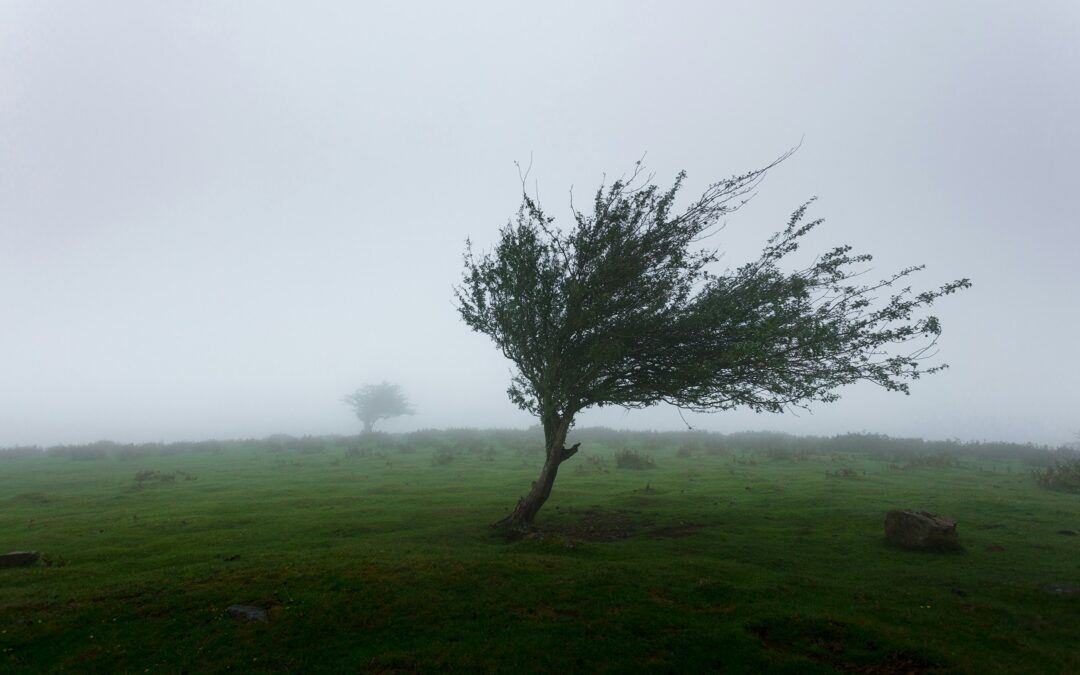
As April soon approaches in British Columbia, spring will eventually unveil its beauty. With blooming flowers and renewed life comes not only vibrancy, but also the arrival of pollen and seasonal allergies. In response to an extended pollination season driven by climate change, researchers from the United States and France have developed an advanced computational model to examine how tree geometry influences the dispersion of airborne pollen grains.
Drawing from a recent report in the American Institute of Physics, scientific editor Stephanie Baum reviewed this new research, which was recently published by AIP Publishing in the journal Physics of Fluids. The new research article is entitled “Flow and Plants: On the Dispersion of Wind-induced Tree Pollen”, published on March 10, 2026, in Physics of Fluids (volume 38).
According to Baum’s report, researchers from Embry‑Riddle Aeronautical University, the University of Rouen Normandy, and the University of Lille have created a computational model to analyze how airflow interacts with trees and the movement of pollen particles.
Since the model measures outdoor airflow through trees, the researchers had to account for a unique natural phenomenon. This phenomenon is referred to as the “wake” of a tree, which is the turbulent wind flow that forms downstream of a tree’s canopy. According to researcher Talib Dbouk, the flow of pollen can become highly impacted within a tree’s wake due to several parameters.
To investigate these parameters, the team used computational fluid dynamics simulations. After validating their model using real-world data from an oak tree, they applied it to a linden tree (Tilia cordata) in Rouen, France. Their findings revealed that airflow through a tree canopy generates complex turbulence patterns, and that variations in tree shape, density, and porosity can dramatically alter how pollen spreads in urban environments.
Overall, these insights have meaningful implications beyond physics. In relation to urban planning and the establishment of green spaces, Dbouk is confident that this work “provides quantitative insight that can inform urban planning decisions, where public authorities can better orient the management of green spaces—trees, parks—in urban spaces.”
As researcher Dbouk further states, “this work contributes to reducing the risks associated with airborne allergenic pollen exposure and thus can better guide future public health guidelines and policies in densely crowded areas.”
—
Christina is a Copywriter from Canada with a Master of Arts in Sociology from Queen’s University. As a social science graduate, Christina is immensely passionate about society and culture, consumer behaviour trends, environmental sustainability, and human rights advocacy. With 7+ years of proficiency in written communication, qualitative research, and critical thinking skills, Christina strives to make a meaningful difference through crafting compelling narratives and impactful content.