
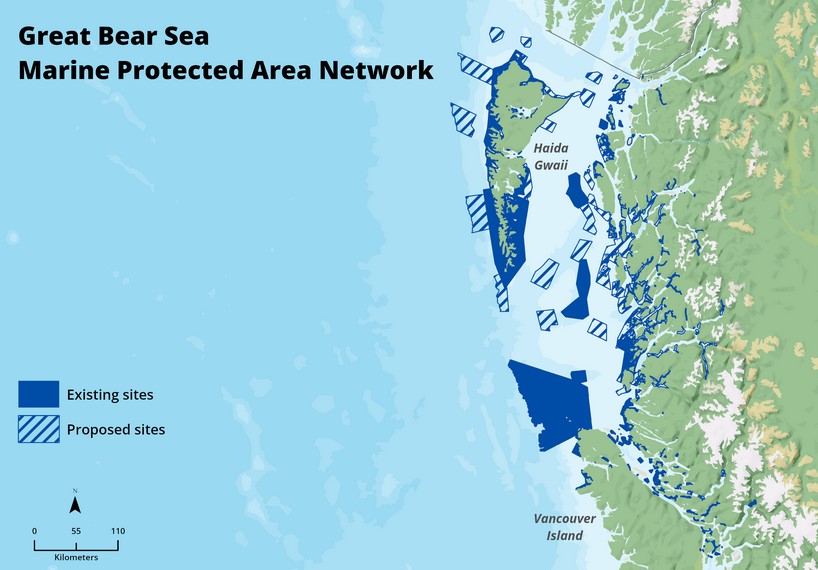
CPAWS-BC is calling for the establishment of a Marine Protected Area (MPA) network, co-developed with Indigenous partners, to safeguard the vibrant network of life in the Great Bear Sea. This network will preserve marine biodiversity, enhance ecosystem resilience, and support sustainable local economies for future generations.
- An interconnected and strongly protected network covering 30 per cent of the Great Bear Sea
- Support Indigenous-led conservation initiatives like Guardian Programs
- Safeguard and restore vital marine ecosystems and wildlife
- Restore and grow fish stocks for future generations
- Support existing and create new jobs in the marine sector
- Finance and grow a coastal conservation economy
The Great Bear Sea, located off the North and Central Coasts of British Columbia, is a vital marine ecosystem hugging the shores of the Great Bear Rainforest.
Rich in biodiversity, this region supports lush kelp forests, vast estuaries, and diverse marine life including humpback whales, herring, rockfish and glass sponge reefs. Indigenous stewardship has sustained these waters for millennia, ensuring vibrant societies and cultures. The Great Bear Sea campaign aims to safeguard this region against threats like overharvesting, habitat loss, and climate change by establishing a Marine Protected Area (MPA) network that balances the needs of nature and humans.
What’s at Stake?
The Great Bear Sea faces threats from climate change, overharvesting, and habitat loss. Without a coordinated approach, these pressures will continue to compromise the health and resilience of marine ecosystems and coastal communities. Protecting this region is essential for sustaining biodiversity, ensuring food security, and supporting local economies. A robust Marine Protected Area (MPA) network will provide refuge for marine life and ensure wildlife and coastal communities can thrive for generations to come.
- Biodiversity loss and overshifting
- Spawning grounds for Pacific Herring & salmon
- Rare and fragile habitats like Glass Sponge Reefs
- Spiritually and culturally significant sites Indigenous and coastal communities