
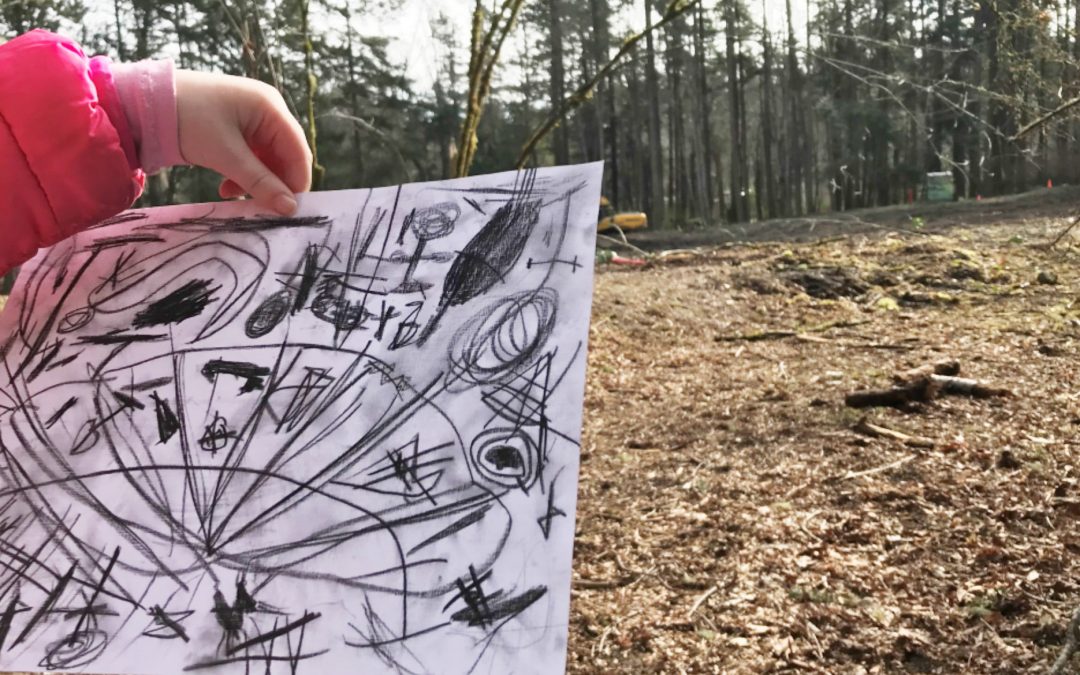
As more than mere representations of ‘humanity’s future’, children are active participants in everyday constructions of now and future worlds. Created by children, educators and pedagogists at UVic Child Care Services, Sensorial Becomings emerges out of our participation in an SSHRC-funded International partnership called Climate Action Network (CAN): Exploring Climate Change Pedagogies With Children. Showcasing moments from the past two years of pedagogical explorations with trees, this exhibit highlights children’s creative responses to their entangled and ongoing place-relations in a time of rapid human-driven change. What becomes possible when we think of our relations as embodied, affected, and sustained by more-than-human worlds? Through this photo-art provocation, we invite you to reconsider sensing with trees, animals, humans and land as a collective endeavour. Might this lead to new possibilities for creating life-sustaining modes of relating, in early childhood and beyond?
Sensorial Becomings: Climate Pedagogies With Children
Pedagogical exploration with trees, and kids thinking about “more-than-human-worlds”, sounds wonderful. An adult (or all ages) counterpart we’re getting going in Victoria is Museum of Walking — outings in natural and historical settings. (interrupted at present by physical distance practice of course).
Barbara Julian
https://treewatchvictoria.blogspot.com/2020/04/why-trees-are-no-longer-considered.html