
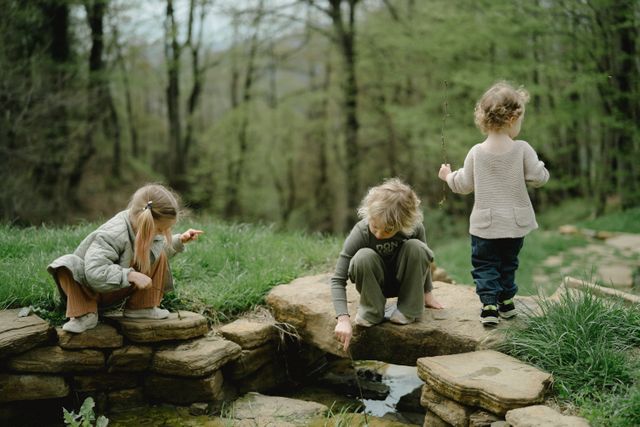
“Restore balance. Most kids have technology, school and extracurricular activities covered. It’s time to add a pinch of adventure, a sprinkle of sunshine and a big handful of outdoor play.” — Penny Whitehouse, environmental educator.
For generations in Canada, summertime for children has been defined as a season of play. Characterized by warm weather, school breaks, and outside activities, the arrival of summer meant long days of sunshine and recreation. However, in today’s world, what was once a formative part of childhood development is now in severe decline.
According to Dr. Richard Larouche, “previous studies and literature reviews have consistently found that children who spend more time outdoors are more physically active and generally have better physical, social, mental, and spiritual health than those who play less outdoors (de Lannoy et al., 2025; James et al., 2025) … yet, there is consistent evidence showing that today’s children don’t play outdoors as much as previous generations (Bassett et al., 2015; Haidt, 2024).”
Although several factors contribute to the decrease in outdoor play, one primary factor is digital technology. As the Digital Wellbeing Hub asserts, the invaluable qualities of summer have been challenged by the rising preference for “screen time.”
For instance, the Digital Wellbeing Hub highlights that “one of the most consistent findings in the literature is that screen time competes with or displaces unstructured play and outdoor recreation. Ho, Yu, and Brown (2024) observed that higher screen time was associated with less engagement in imaginative play among children, indicating a direct trade-off.”
Similarly, Statistics Canada outlines, “according to the Canadian Health Measures Survey (CHMS), while nearly half (46%) of children and youth aged 3 to 17 years met the recreational screen time guidelines in 2024, more than half (54%) exceeded them.”
Another Statistics Canada study published last year reports, “… over 9 in 10 preschoolers aged 3 and 4 years (91%) and over half (52%) of children aged 5 to 11 years met recommended physical activity levels in the period from 2022 to 2024. These rates were largely unchanged from 2018 to 2019.”
However, the research also found that “among youth aged 12 to 17 years … the proportion meeting physical activity guidelines fell from 36% to 22%. Youth aged 12 to 17 years also had the highest average sedentary time among all age groups, at 10.6 hours per day. The study also found that rates for children meeting screen time recommendations declined from 73% to 62%.”
With this in mind, it is crucial for parents, guardians, and the local community to promote and prioritize outdoor recreation and play. This can begin locally in the city of Vancouver, which offers interactive outdoor activities designed to increase youth engagement in the outdoors this summer. Examples include:
- Free Plant Walk: Plant Identification and Foraging 101 — Stanley Park
- Teen Bird Walk — Iona Beach Regional Park
- Nature Enthusiast Day — Jericho Beach Park
- Waterfront Wednesdays — Waterfront Park
- Fun in the Sun Fridays — Vancouver Public Library (West Point Grey Branch)
Incorporating diverse forms of outdoor play into children’s summer schedules offers a communal, participatory, hands-on experience with nature that helps counteract the sedentary effects of “screen time.” Whether it be nature walks, beach outings, bird watching, or plant exploration, the opportunity to play and immerse children in nature is a vital component of youth development that should not be replaced.
Going forward, let’s make sure the remaining days of summer are filled with sun, fun, and opportunities for children to reconnect with the outdoors—one adventure at a time.
—
Christina is a Copywriter from Canada with a Master of Arts in Sociology from Queen’s University. As a social science graduate, Christina is immensely passionate about society and culture, consumer behaviour trends, environmental sustainability, and human rights advocacy. With 7+ years of proficiency in written communication, qualitative research, and critical thinking skills, Christina strives to make a meaningful difference through crafting compelling narratives and impactful content.